


Clinical Summary
Journal of Clinical Gastroenterology
July 2024

The Tissue Systems Pathology test provides clinically actionable risk stratification in patients with Barrett’s esophagus: A multicenter U.S. clinical experience

REFERENCE

Villa NA, Ordonez-Castellanos M, Yodice M, et al. The tissue systems pathology test objectively risk-stratifies patients with Barrett’s esophagus results from a multicenter US clinical experience study. J Clin Gastroenterol. 2024 Jul 2. doi: 10.1097/MCG.0000000000002040. Online ahead of print.

CLINICAL IMPACT

This study highlights the clinical experience of TissueCypher testing ordered by 891 physicians in over 8,000 patients. This real-world clinical use of TissueCypher reflects the U.S. BE surveillance population with a significant proportion (93.9%) of diagnosed cases having NDBE and 94.3% of orders originating from community-based practices. Key findings of this study indicate that TissueCypher provides:

  • Personalized risk stratification of patients within all clinically relevant subsets, including those considered to be at low risk for progression according to population-based risk factors. (See figure 2.)
  • Identification of high-risk NDBE patients, defined as those with a similar or higher predicted 5-year risk of progression than patients with confirmed low-grade dysplasia (LGD) (See figure 1).
  • Identification of low-risk patients within the indefinite (IND) and LGD populations whose predicted 5-year progression rates are similar to patients with NDBE (See figure 1).
BACKGROUND

Current surveillance and treatment guidelines for Barrett’s esophagus are based solely on the population-based risk of progression associated with a histology diagnosis. By this standard, more than 90% of patients are originally diagnosed with NDBE and considered low risk. Unfortunately, even with a low overall progression rate, this NDBE population is so large that it will include up to 50% of the patients who progress to HGD/EAC.¹

AIMS

The aims of this study were to evaluate the performance of TissueCypher testing in the risk-stratification of clinically high- and low-risk subsets of patients with Barrett’s esophagus in real-world clinical practice.

METHODS

TissueCypher results for 8,080 BE patients (from tests ordered from June 2016 to July 2023 by 891 physicians at 505 clinical sites) were abstracted from clinical reports per an IRB-approved protocol. The clinicopathologic data were collected from pathology and endoscopy reports. The TissueCypher risk class results and predicted probability of progression to HGD/EAC within 5 years were then evaluated in clinically relevant subsets of BE patients.

Risk stratification based on patient histology

Across all three histology diagnoses (NDBE, IND, and LGD), the mean 5-year risk of progression to HGD/EAC represented by the gray box-and-whisker chart was in line with published histology-based progression rates. This confirms that, as a population, patients with an NDBE diagnosis are at the lowest risk of progression, and patients with LGD have the highest risk of progression.

However, within the NDBE population, patients identified by TissueCypher intermediate and high-risk scores have a personal risk of progression higher than confirmed LGD (8.5% within 5 years). Current guidelines specify that management for patients with a progression risk similar to or greater than LGD would include short-interval surveillance or EET.

By contrast, TissueCypher low-risk results identified a subset of IND and LGD patients with a progression risk similar to NDBE, for which long-interval surveillance would be more appropriate.

RISK STRATIFICATION IN TRADITIONALLY LOW-RISK POPULATIONS

TissueCypher provided significant risk stratification in all evaluated clinicopathologic subsets, even those traditionally considered low-risk populations. Among short-segment patients, TissueCypher identified 15% of those patients with intermediate or high
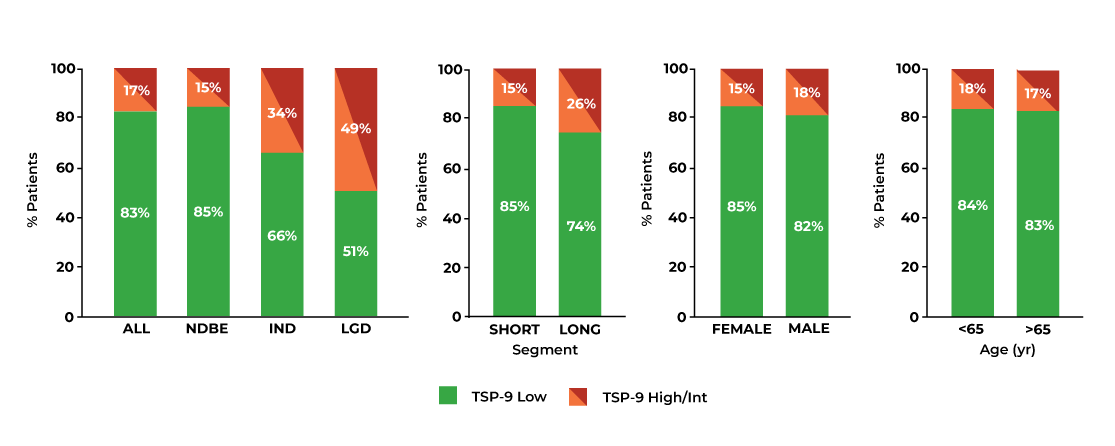
Figure 2. Risk stratification by TSP-9 in clinically-relevant subsets of BE patients

Want to learn more about
DecisionDx-Melanoma?

Clinical Summary
Journal of Clinical Gastroenterology
July 2024

The Tissue Systems Pathology test provides clinically actionable risk stratification in patients with Barrett’s esophagus: A multicenter U.S. clinical experience

REFERENCE

Villa NA, Ordonez-Castellanos M, Yodice M, et al. The tissue systems pathology test objectively risk-stratifies patients with Barrett’s esophagus results from a multicenter US clinical experience study. J Clin Gastroenterol. 2024 Jul 2. doi: 10.1097/MCG.0000000000002040. Online ahead of print.

CLINICAL IMPACT

This study highlights the clinical experience of TissueCypher testing ordered by 891 physicians in over 8,000 patients. This real-world clinical use of TissueCypher reflects the U.S. BE surveillance population with a significant proportion (93.9%) of diagnosed cases having NDBE and 94.3% of orders originating from community-based practices. Key findings of this study indicate that TissueCypher provides:

  • Personalized risk stratification of patients within all clinically relevant subsets, including those considered to be at low risk for progression according to population-based risk factors. (See figure 2.)
  • Identification of high-risk NDBE patients, defined as those with a similar or higher predicted 5-year risk of progression than patients with confirmed low-grade dysplasia (LGD) (See figure 1).
  • Identification of low-risk patients within the indefinite (IND) and LGD populations whose predicted 5-year progression rates are similar to patients with NDBE (See figure 1).
BACKGROUND

Current surveillance and treatment guidelines for Barrett’s esophagus are based solely on the population-based risk of progression associated with a histology diagnosis. By this standard, more than 90% of patients are originally diagnosed with NDBE and considered low risk. Unfortunately, even with a low overall progression rate, this NDBE population is so large that it will include up to 50% of the patients who progress to HGD/EAC.¹

AIMS

The aims of this study were to evaluate the performance of TissueCypher testing in the risk-stratification of clinically high- and low-risk subsets of patients with Barrett’s esophagus in real-world clinical practice.

METHODS

TissueCypher results for 8,080 BE patients (from tests ordered from June 2016 to July 2023 by 891 physicians at 505 clinical sites) were abstracted from clinical reports per an IRB-approved protocol. The clinicopathologic data were collected from pathology and endoscopy reports. The TissueCypher risk class results and predicted probability of progression to HGD/EAC within 5 years were then evaluated in clinically relevant subsets of BE patients.

Risk stratification based on patient histology

Across all three histology diagnoses (NDBE, IND, and LGD), the mean 5-year risk of progression to HGD/EAC represented by the gray box-and-whisker chart was in line with published histology-based progression rates. This confirms that, as a population, patients with an NDBE diagnosis are at the lowest risk of progression, and patients with LGD have the highest risk of progression.

However, within the NDBE population, patients identified by TissueCypher intermediate and high-risk scores have a personal risk of progression higher than confirmed LGD (8.5% within 5 years). Current guidelines specify that management for patients with a progression risk similar to or greater than LGD would include short-interval surveillance or EET.

By contrast, TissueCypher low-risk results identified a subset of IND and LGD patients with a progression risk similar to NDBE, for which long-interval surveillance would be more appropriate.

RISK STRATIFICATION IN TRADITIONALLY LOW-RISK POPULATIONS

TissueCypher provided significant risk stratification in all evaluated clinicopathologic subsets, even those traditionally considered low-risk populations. Among short-segment patients, TissueCypher identified 15% of those patients with intermediate or high

Figure 2. Risk stratification by TSP-9 in clinically-relevant subsets of BE patients

Want to learn more about
DecisionDx-SCC?

Clinical Summary
Journal of Clinical Gastroenterology
July 2024

The Tissue Systems Pathology test provides clinically actionable risk stratification in patients with Barrett’s esophagus: A multicenter U.S. clinical experience

REFERENCE

Villa NA, Ordonez-Castellanos M, Yodice M, et al. The tissue systems pathology test objectively risk-stratifies patients with Barrett’s esophagus results from a multicenter US clinical experience study. J Clin Gastroenterol. 2024 Jul 2. doi: 10.1097/MCG.0000000000002040. Online ahead of print.

CLINICAL IMPACT

This study highlights the clinical experience of TissueCypher testing ordered by 891 physicians in over 8,000 patients. This real-world clinical use of TissueCypher reflects the U.S. BE surveillance population with a significant proportion (93.9%) of diagnosed cases having NDBE and 94.3% of orders originating from community-based practices. Key findings of this study indicate that TissueCypher provides:

  • Personalized risk stratification of patients within all clinically relevant subsets, including those considered to be at low risk for progression according to population-based risk factors. (See figure 2.)
  • Identification of high-risk NDBE patients, defined as those with a similar or higher predicted 5-year risk of progression than patients with confirmed low-grade dysplasia (LGD) (See figure 1).
  • Identification of low-risk patients within the indefinite (IND) and LGD populations whose predicted 5-year progression rates are similar to patients with NDBE (See figure 1).
BACKGROUND

Current surveillance and treatment guidelines for Barrett’s esophagus are based solely on the population-based risk of progression associated with a histology diagnosis. By this standard, more than 90% of patients are originally diagnosed with NDBE and considered low risk. Unfortunately, even with a low overall progression rate, this NDBE population is so large that it will include up to 50% of the patients who progress to HGD/EAC.¹

AIMS

The aims of this study were to evaluate the performance of TissueCypher testing in the risk-stratification of clinically high- and low-risk subsets of patients with Barrett’s esophagus in real-world clinical practice.

METHODS

TissueCypher results for 8,080 BE patients (from tests ordered from June 2016 to July 2023 by 891 physicians at 505 clinical sites) were abstracted from clinical reports per an IRB-approved protocol. The clinicopathologic data were collected from pathology and endoscopy reports. The TissueCypher risk class results and predicted probability of progression to HGD/EAC within 5 years were then evaluated in clinically relevant subsets of BE patients.

Risk stratification based on patient histology

Across all three histology diagnoses (NDBE, IND, and LGD), the mean 5-year risk of progression to HGD/EAC represented by the gray box-and-whisker chart was in line with published histology-based progression rates. This confirms that, as a population, patients with an NDBE diagnosis are at the lowest risk of progression, and patients with LGD have the highest risk of progression.

However, within the NDBE population, patients identified by TissueCypher intermediate and high-risk scores have a personal risk of progression higher than confirmed LGD (8.5% within 5 years). Current guidelines specify that management for patients with a progression risk similar to or greater than LGD would include short-interval surveillance or EET.

By contrast, TissueCypher low-risk results identified a subset of IND and LGD patients with a progression risk similar to NDBE, for which long-interval surveillance would be more appropriate.

RISK STRATIFICATION IN TRADITIONALLY LOW-RISK POPULATIONS

TissueCypher provided significant risk stratification in all evaluated clinicopathologic subsets, even those traditionally considered low-risk populations. Among short-segment patients, TissueCypher identified 15% of those patients with intermediate or high

Figure 2. Risk stratification by TSP-9 in clinically-relevant subsets of BE patients

Want to learn more about
Mypath-Melanoma?

Clinical Summary
Journal of Clinical Gastroenterology
July 2024

The Tissue Systems Pathology test provides clinically actionable risk stratification in patients with Barrett’s esophagus: A multicenter U.S. clinical experience

REFERENCE

Villa NA, Ordonez-Castellanos M, Yodice M, et al. The tissue systems pathology test objectively risk-stratifies patients with Barrett’s esophagus results from a multicenter US clinical experience study. J Clin Gastroenterol. 2024 Jul 2. doi: 10.1097/MCG.0000000000002040. Online ahead of print.

CLINICAL IMPACT

This study highlights the clinical experience of TissueCypher testing ordered by 891 physicians in over 8,000 patients. This real-world clinical use of TissueCypher reflects the U.S. BE surveillance population with a significant proportion (93.9%) of diagnosed cases having NDBE and 94.3% of orders originating from community-based practices. Key findings of this study indicate that TissueCypher provides:

  • Personalized risk stratification of patients within all clinically relevant subsets, including those considered to be at low risk for progression according to population-based risk factors. (See figure 2.)
  • Identification of high-risk NDBE patients, defined as those with a similar or higher predicted 5-year risk of progression than patients with confirmed low-grade dysplasia (LGD) (See figure 1).
  • Identification of low-risk patients within the indefinite (IND) and LGD populations whose predicted 5-year progression rates are similar to patients with NDBE (See figure 1).
BACKGROUND

Current surveillance and treatment guidelines for Barrett’s esophagus are based solely on the population-based risk of progression associated with a histology diagnosis. By this standard, more than 90% of patients are originally diagnosed with NDBE and considered low risk. Unfortunately, even with a low overall progression rate, this NDBE population is so large that it will include up to 50% of the patients who progress to HGD/EAC.¹

AIMS

The aims of this study were to evaluate the performance of TissueCypher testing in the risk-stratification of clinically high- and low-risk subsets of patients with Barrett’s esophagus in real-world clinical practice.

METHODS

TissueCypher results for 8,080 BE patients (from tests ordered from June 2016 to July 2023 by 891 physicians at 505 clinical sites) were abstracted from clinical reports per an IRB-approved protocol. The clinicopathologic data were collected from pathology and endoscopy reports. The TissueCypher risk class results and predicted probability of progression to HGD/EAC within 5 years were then evaluated in clinically relevant subsets of BE patients.

Risk stratification based on patient histology

Across all three histology diagnoses (NDBE, IND, and LGD), the mean 5-year risk of progression to HGD/EAC represented by the gray box-and-whisker chart was in line with published histology-based progression rates. This confirms that, as a population, patients with an NDBE diagnosis are at the lowest risk of progression, and patients with LGD have the highest risk of progression.

However, within the NDBE population, patients identified by TissueCypher intermediate and high-risk scores have a personal risk of progression higher than confirmed LGD (8.5% within 5 years). Current guidelines specify that management for patients with a progression risk similar to or greater than LGD would include short-interval surveillance or EET.

By contrast, TissueCypher low-risk results identified a subset of IND and LGD patients with a progression risk similar to NDBE, for which long-interval surveillance would be more appropriate.

RISK STRATIFICATION IN TRADITIONALLY LOW-RISK POPULATIONS

TissueCypher provided significant risk stratification in all evaluated clinicopathologic subsets, even those traditionally considered low-risk populations. Among short-segment patients, TissueCypher identified 15% of those patients with intermediate or high

Figure 2. Risk stratification by TSP-9 in clinically-relevant subsets of BE patients

Would you like to talk more about
data related to TissueCypher?